
Never Go Back: Why Chasing Your Old Fitness Is Holding You Back
Mar 03, 2026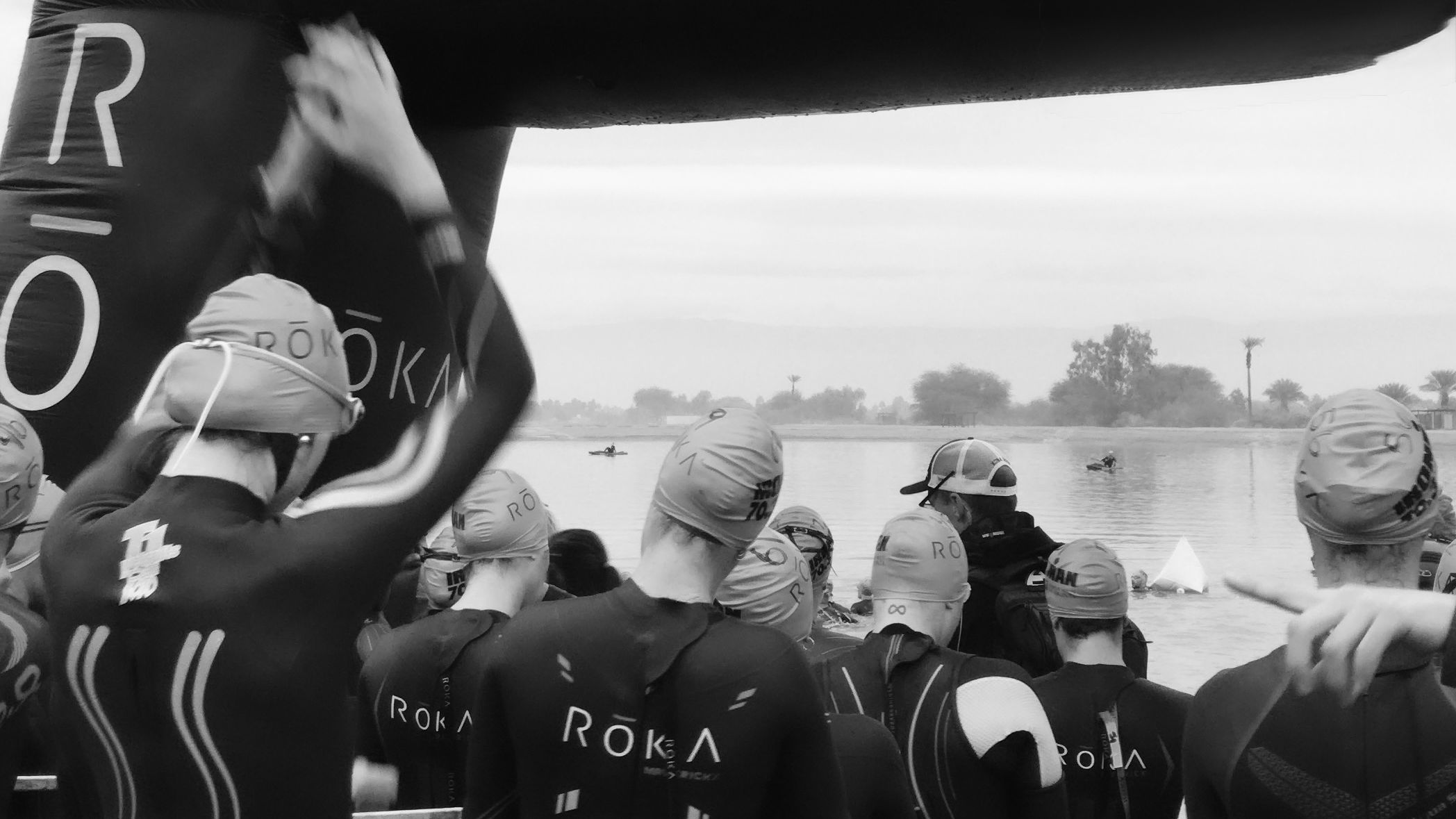
Race season is here.
In less than four weeks, the unofficial North American season opens at Ironman 70.3 Oceanside. Around here, that race always feels like the real beginning. It sets the tone for the season, especially for those of us who are local and have coached so many athletes onto that start line.
And right about now, the comparison starts getting loud.
We hear it after long rides and tempo runs. We hear it in quiet check-ins. It usually sounds like this: “I'm just trying to get back to where I was.”
Let’s slow that down.
When you say you want to get back, you’re usually referencing a season when you felt lighter, faster, less stressed, more confident. But here’s what we tell our athletes every year: Your past performance is never as good as your potential — if you are willing to understand who you are now and build from there.
That former version of you doesn’t disappear. It becomes part of you. Every build, every reset, every setback, every breakthrough is integrated. It lives in your nervous system. It lives in your movement patterns. It lives in your decision-making. It’s cellular in the sense that adaptation leaves a trace.
But it is not your ceiling. The mistake happens when you treat it like one.
When you try to recreate old numbers without acknowledging that your life, your stress, your physiology, and your identity have evolved, you create friction. And we see so many athletes stall not because they lack discipline, but because they are training from comparison instead of presence.
They are trying to literally go back in time. And that is the one direction human physiology does not move.
In yoga philosophy, practice is not about clinging to a former expression of strength. It’s about steady effort combined with non-attachment. You commit fully, but you don’t grip an outdated identity. The discipline is in showing up as you are today. The freedom is in releasing who you think you should still be.
Modern neuroscience reinforces this. Your brain is predictive and adaptive. It is constantly recalibrating based on current inputs — sleep, stress load, hormonal shifts, emotional demands, work intensity. Performance is not produced by memory. It is produced by present-moment integration.
And we know from sport psychology research that present-moment awareness is foundational to peak performance. Athletes who can anchor in the now — instead of narrating themselves through the past — access cleaner execution, better pacing decisions, and more efficient nervous system regulation.
When you chase an old version of yourself, your brain registers mismatch. The demand does not align with the current data. That mismatch shows up as excessive fatigue, stalled adaptation, self-doubt, and sometimes injury.
It is not weakness. It is misalignment.
Four weeks out from Oceanside, this matters.
You do not need to resurrect an old season. You need clarity about this one.
Who are you right now?
What does your current life support?
Where is your real edge today?
Your past prepared you for this moment. It built capacity. It taught resilience. It refined skill. But it is not the full expression of what is possible now.
Potential is always contextual.
And when you stop trying to get back and instead train forward — integrating everything you’ve lived — you unlock something more stable than nostalgia: progression.
We don’t coach athletes to rewind. We coach them to evolve.
If you’ve been feeling behind as race season approaches, we want you to consider this:
Maybe you’re not behind. Maybe you’re standing at the edge of a different version of strong — one that requires presence, honesty, and alignment rather than comparison.
And more so than anything else, forward motion. Never go back.
SUBSCRIBE FOR WEEKLY UPDATES
Be the first to know about our latest adventures, offers and podcast episodes.
We hate SPAM. We will never sell your information, for any reason.
