
Awake and Ready: The Missing Link in Ironman Training
Apr 27, 2026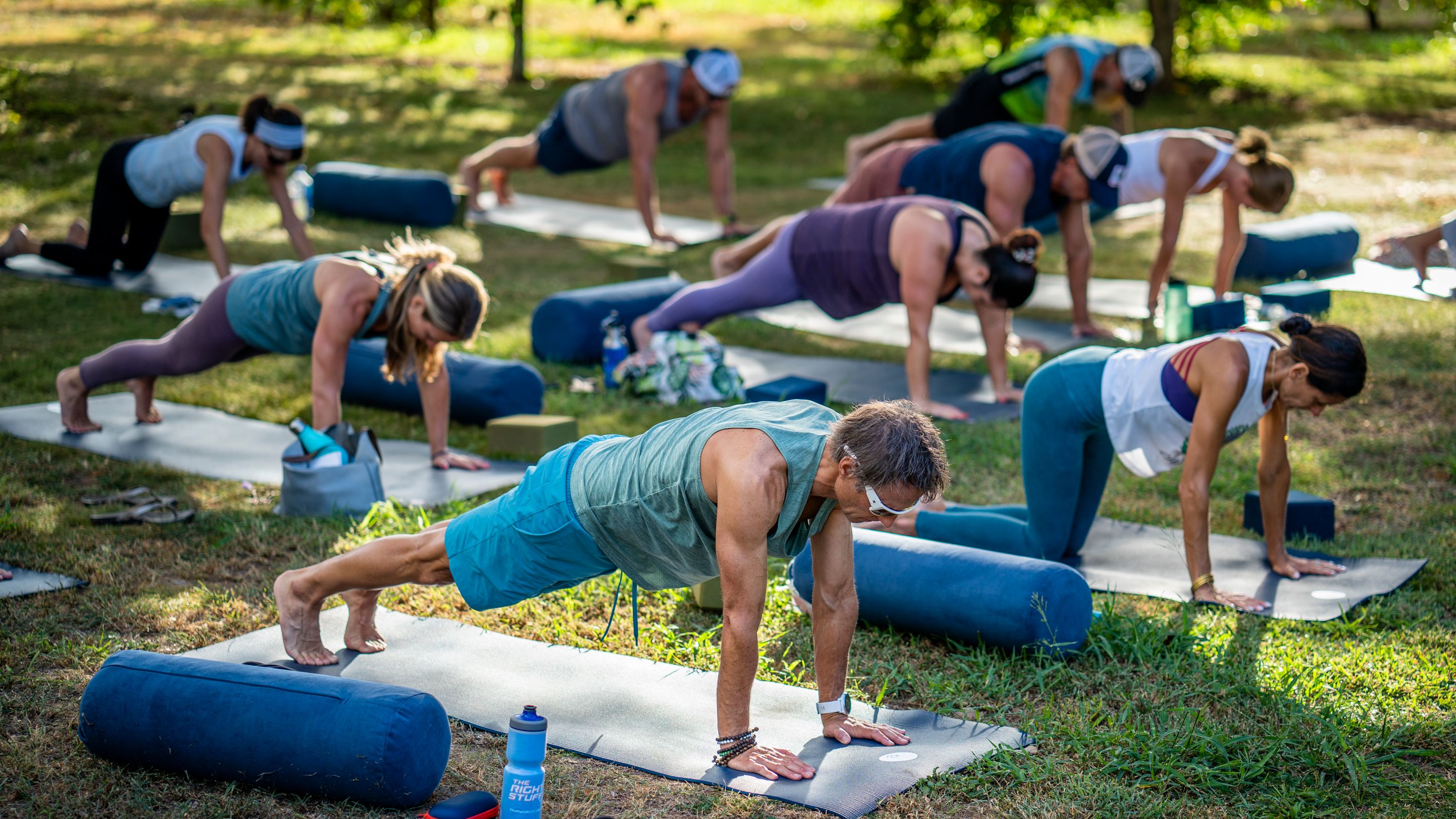
There comes a point in every Ironman where the noise fades.
The crowds are still there. The course is still unfolding. But internally, things get quieter. Simpler. What once felt big and complex narrows down to breath, movement, and the steady rhythm of your own thoughts.
This is the space most athletes eventually arrive at, whether they’ve trained for it or not.
Yoga prepares you for that space.
Too often, yoga is treated as something extra. A light stretch at the end of a session or a recovery day option when the body feels tight. But that view misses its real value. Yoga isn’t just a complement to training. It’s a way to deepen it.
At its core, Ironman is not just about endurance. It’s about how well you can stay present inside effort over a long period of time. That’s where yoga begins to shift things.
The first place it shows up is in the breath.
Breath is often overlooked in endurance training, yet it is the one tool you carry through every part of the race. In yoga, you learn to work with it. To steady it. To return to it when things start to drift. Over time, that awareness carries into your training. You begin to notice when your breathing becomes shallow or rushed, and you learn how to bring it back under control without forcing it.
That ability matters late in the race, when fatigue starts to influence everything. A steady breath can calm the mind and regulate effort in a way that metrics alone cannot.
Yoga also develops a kind of strength that is easy to overlook but hard to race without.
It doesn’t always show up in obvious ways. It’s not about lifting more or pushing harder. Instead, it builds stability. It strengthens the smaller systems that support your movement over time. The hips that keep you aligned on the run. The core that holds your position on the bike. The shoulders that carry you through the swim without unnecessary tension.
This is the kind of strength that helps you maintain form when fatigue sets in. Not for a few minutes, but for hours.
Mobility improves as well, but not in a way that creates more looseness without control. Yoga builds range of motion with awareness. You learn how to move with intention rather than simply trying to increase flexibility. Over time, this leads to more efficient movement across all three disciplines. Your stroke feels smoother. Your position feels more sustainable. Your stride becomes less forced.
It’s not about changing your mechanics overnight. It’s about removing the small restrictions that quietly hold you back.
Where yoga often has the greatest impact, though, is in the mind.
Every athlete knows the moment when the body is still capable, but the mind starts to resist. It begins to question the pace, the distance, the discomfort. In those moments, your ability to stay present becomes more important than your fitness.
Yoga gives you a place to practice that skill.
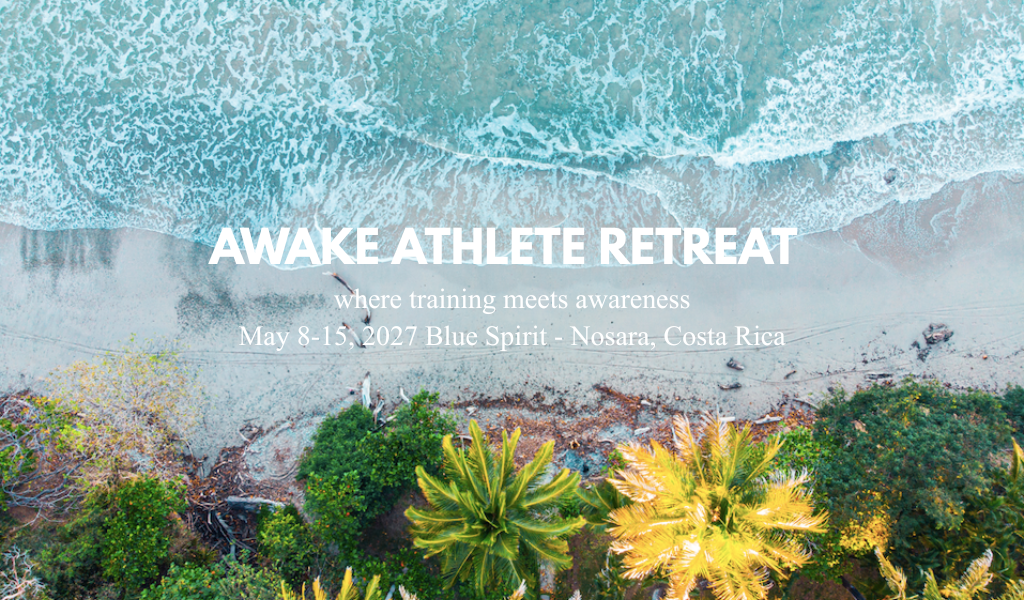
Registration Now Open: Awake Athlete Retreat May 8-15, 2027 in Nosara Costa Rica
When you hold a pose, there is nowhere else to go. No distraction, no forward progress to chase. Just sensation and your response to it. You learn to observe discomfort without immediately reacting. You learn to stay, even when it would be easier to come out.
That same skill carries into racing. It shows up when the effort builds and you choose not to back off right away. It shows up when the mind looks for an exit and you instead return to the breath and keep moving forward.
Recovery is another piece that often gets underestimated.
Training breaks the body down. Progress comes from how well you absorb that work. Yoga supports this process by helping the nervous system shift out of a constant state of stress. It encourages better sleep, more complete recovery, and a greater sense of balance between sessions.
This allows you to train more consistently, and consistency is what ultimately drives long-term improvement.
All of these elements—breath, strength, mobility, awareness, recovery—come together in a way that supports not just performance, but experience.
Because Ironman is not only about getting to the finish line. It’s about how you move through the day to get there.
Yoga helps you stay connected to that process. It gives you tools to remain steady when things get difficult and present when things are going well. It teaches you how to respond instead of react.
In the end, it’s not something separate from your training.
It’s what allows all of your training to come together.
To arrive on the start line not just fit, but clear. Not just prepared, but grounded.
Awake and ready for what the day will ask of you.
SUBSCRIBE FOR WEEKLY UPDATES
Be the first to know about our latest adventures, offers and podcast episodes.
We hate SPAM. We will never sell your information, for any reason.
